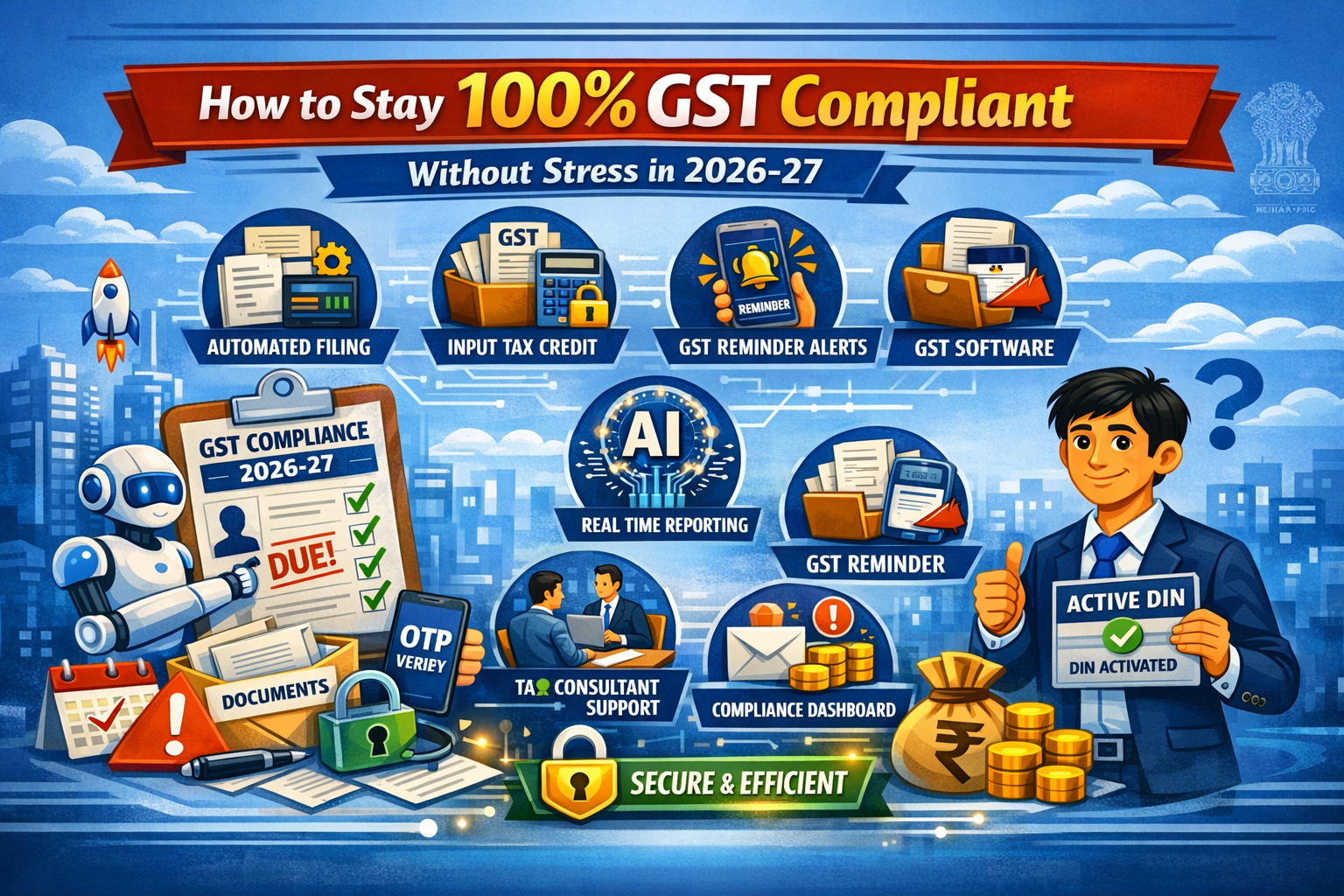
GST compliance is one of the most important responsibilities for any business in India. Yet, for many business owners, it feels overwhelming due to frequent filings, changing rules, and strict deadlines.
The good news is — GST compliance doesn’t have to be stressful.
With proper planning, the right systems, and a disciplined approach, you can stay fully compliant without last-minute panic, penalties, or notices.
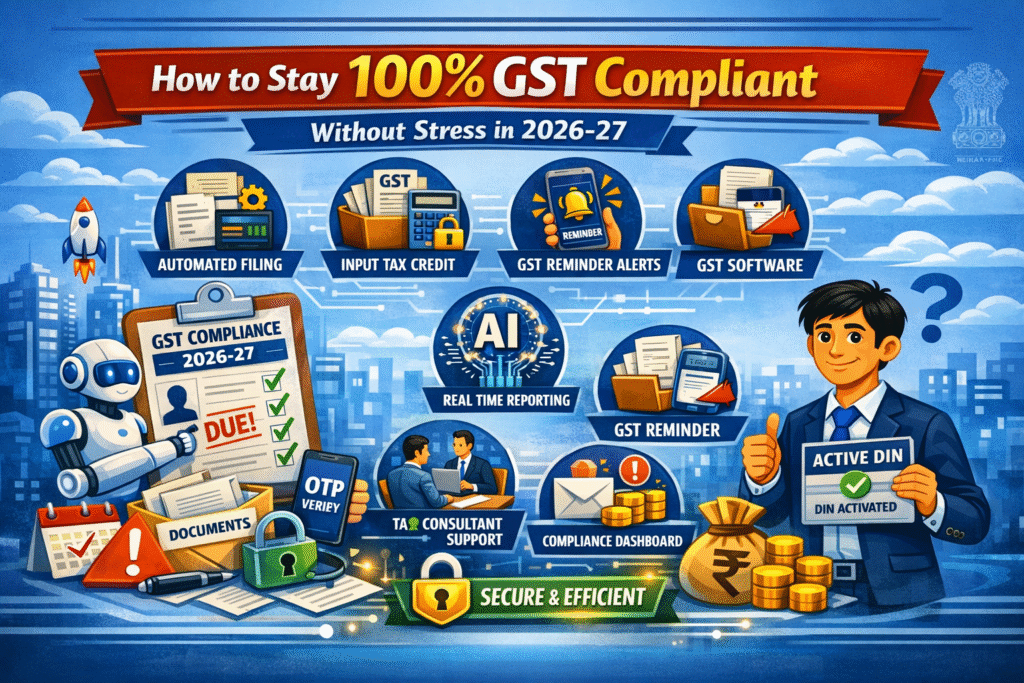
In this guide, we’ll break down practical, easy-to-follow strategies to help you stay 100% GST compliant in FY 2026–27—stress-free.
Why GST Compliance Becomes Stressful
Before solving the issue, it’s important to understand the root causes:
- Multiple monthly and quarterly return filings
- Complex Input Tax Credit (ITC) rules
- Frequent GST updates and notifications
- Dependency on vendor compliance
- Lack of proper accounting systems
- Last-minute filing habits
👉 In reality, GST stress is not about complexity—it’s about lack of process and consistency.
Step-by-Step Guide to Stress-Free GST Compliance
1. Build a Monthly GST System (Not Just Filing Habit)
Instead of doing everything at the end of the month, divide your work:
Weekly Workflow:
- Week 1: Record all sales invoices
- Week 2: Record purchases and expenses
- Week 3: ITC reconciliation with GSTR-2B
- Week 4: Final review and return filing
✔ This reduces workload pressure
✔ Minimizes errors
✔ Ensures timely compliance
ITC mismatch is one of the top reasons for GST notices.
To avoid issues:
- Match purchase records with GSTR-2B
- Do not claim excess ITC
- Identify missing invoices early
- Follow up with non-compliant vendors
👉 Monthly reconciliation ensures clean books and zero surprises at year-end.
3. Never Miss GST Deadlines
Timely filing is the backbone of compliance.
Important Deadlines:
- GSTR-1 → 11th of next month
- GSTR-3B → 20th of next month
Late filing leads to:
- Late fees
- Interest charges
- Possible notices
✔ Set reminders
✔ Use compliance tools
✔ Avoid last-day filing
4. Maintain Accurate and Organized Records
Your documentation defines your compliance strength.
Ensure:
- Proper invoice format with GST details
- Correct HSN/SAC codes
- Accurate GST rates
- Sequential invoice numbering
- Proper record of debit/credit notes
👉 Strong records = Easy audits + Strong legal protection
5. Monitor Vendor Compliance Regularly
Your ITC depends on your vendors’ filings.
If vendors fail to:
- File GSTR-1
- Upload correct invoices
👉 Your ITC can be denied.
✔ Work with reliable vendors
✔ Track their compliance status
✔ Avoid high-risk suppliers
6. Understand Reverse Charge Mechanism (RCM)
Many businesses ignore RCM obligations.
Under RCM:
- The buyer pays GST instead of the seller
- Applies to specific goods/services
✔ Identify RCM transactions
✔ Pay tax on time
✔ Report correctly in returns
Ignoring RCM can lead to penalties and interest.
7. Use GST-Ready Accounting Software
Manual accounting increases errors and workload.
Use software that:
- Generates GST invoices
- Tracks ITC automatically
- Prepares return data
- Reduces human mistakes
👉 Automation simplifies compliance and saves time.
8. Plan GST Compliance for the Entire Year
Do not wait for March to fix everything.
✔ Conduct monthly reconciliations
✔ Perform quarterly reviews
✔ Track liabilities continuously
👉 Year-end becomes smooth when compliance is maintained throughout the year.
9. Stay Updated with Latest GST Changes
GST laws are dynamic and frequently updated.
Stay informed by:
- Following official notifications
- Consulting experts
- Updating your processes accordingly
Ignoring updates may result in unintentional non-compliance.
10. Take Professional GST Support
As your business grows, GST becomes more complex.
A professional can help you:
- File accurate returns
- Optimize ITC
- Handle GST notices
- Ensure complete compliance
👉 Expert support saves time, reduces risk, and ensures peace of mind.
Common GST Mistakes That Cause Stress
Avoid these common issues:
❌ Filing returns at the last minute
❌ Ignoring ITC reconciliation
❌ Not tracking vendor filings
❌ Maintaining poor records
❌ Missing RCM liabilities
❌ Trying to manage GST without expertise
👉 Fixing these alone can eliminate most compliance problems.
Benefits of Staying 100% GST Compliant
When your GST is properly managed:
✔ No penalties or late fees
✔ Better cash flow management
✔ Improved business credibility
✔ Smooth operations
✔ Reduced risk of notices
✔ Peace of mind
👉 Compliance is not just a legal requirement—it’s a business advantage.
GST Compliance Checklist for 2026–27
✔ Maintain proper invoices
✔ Reconcile ITC monthly
✔ File returns on time
✔ Monitor vendor compliance
✔ Track RCM transactions
✔ Stay updated with GST rules
✔ Keep records organized
Conclusion
GST compliance in FY 2026–27 doesn’t have to be complicated or stressful.
With:
- Proper planning
- Consistent processes
- Accurate records
- Timely filings
👉 You can stay 100% compliant without pressure.
Treat GST as a routine system, not a burden—and your business will run smoother and more efficiently.
FAQs: GST Compliance 2026–27
1. What is the easiest way to stay GST compliant?
The easiest way is to follow a monthly system—record transactions regularly, reconcile ITC, and file returns on time instead of waiting till the last date.
2. What happens if GST returns are filed late?
Late filing leads to late fees, interest on tax liability, and may increase the chances of receiving GST notices.
3. Why is ITC reconciliation important?
ITC reconciliation ensures that the tax credit you claim matches government records. Mismatches can lead to notices or disallowed credits.
4. Can I claim ITC if my vendor has not filed returns?
No. If the vendor has not filed GSTR-1 or uploaded invoices, your ITC may be blocked or reversed.
5. Is GST compliance difficult for small businesses?
It can be challenging without proper systems. However, with basic discipline and the right tools, it becomes manageable and routine.
6. Do I need accounting software for GST compliance?
While not mandatory, GST-ready software significantly reduces errors, saves time, and simplifies compliance.
7. When should I take professional GST help?
You should consider expert help when your transactions increase, compliance becomes complex, or you want to avoid risks and focus on business growth.