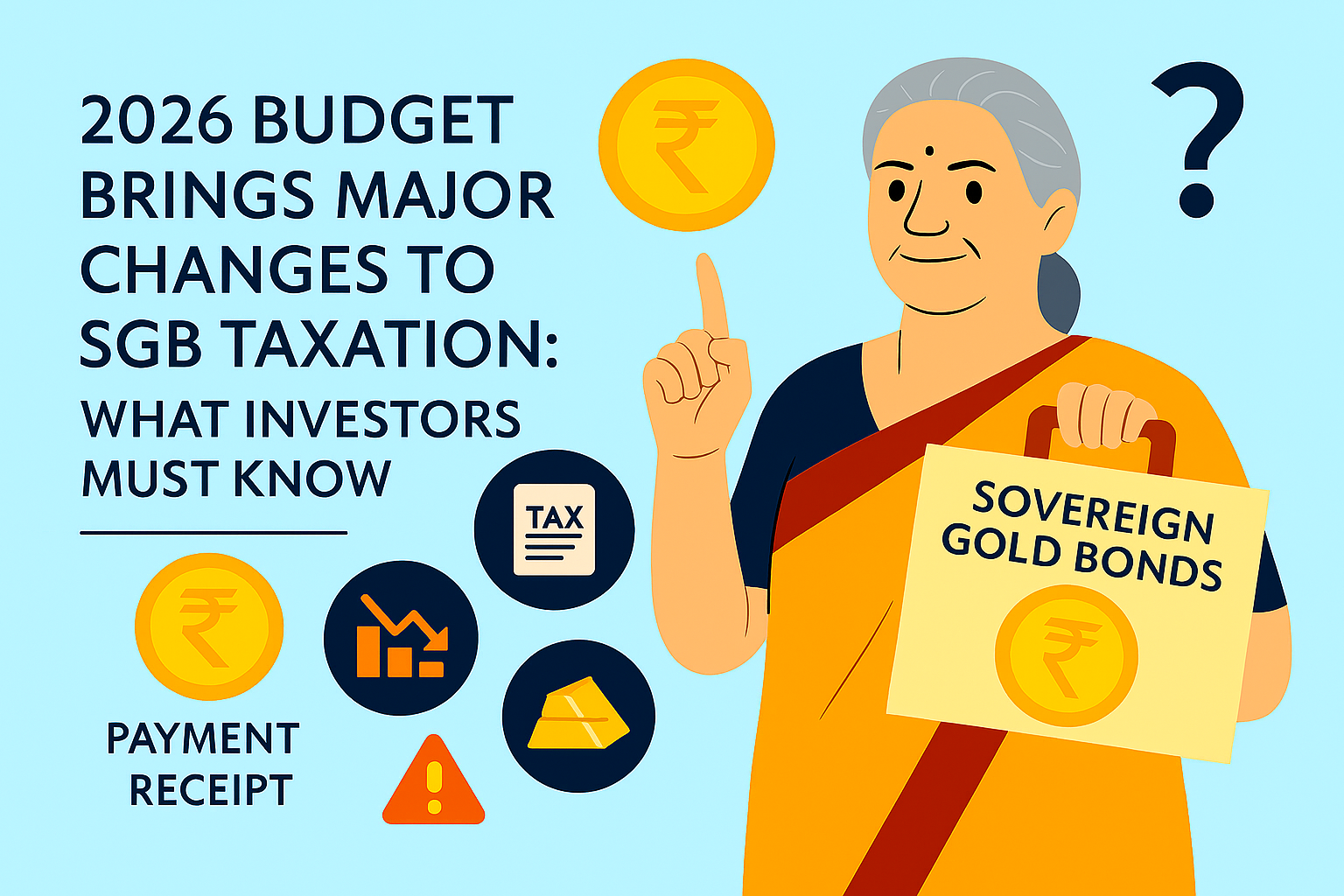
The Union Budget 2026–27 has introduced significant changes to the taxation rules governing Sovereign Gold Bonds (SGBs). These changes will directly impact existing investors as well as those planning to invest in SGBs in the future.
If you hold SGBs—or are considering investing—understanding these new rules is essential for effective tax planning and portfolio strategy.
Let’s break down what has changed and what it means for you.
What Are Sovereign Gold Bonds (SGBs)?
Sovereign Gold Bonds are government-backed securities issued by the Reserve Bank of India (RBI). They are denominated in grams of gold and serve as an alternative to physical gold investment.
Key features include:
- 2.5% annual interest (taxable)
- 8-year maturity
- Option to exit after 5 years
- Capital gains tax exemption on maturity (subject to conditions)
Until now, SGBs were considered a tax-efficient gold investment instrument. However, Budget 2026 has introduced stricter eligibility conditions for tax exemption.
What Has Changed in Budget 2026?
New Rule Effective April 1, 2026
From April 1, 2026 onward, capital gains tax exemption on SGBs will be available only if both conditions are fulfilled:
1. Purchased Directly from RBI at Original Issuance
The SGB must be bought directly during the original issuance from the Reserve Bank of India (or authorized banks/post offices at issuance stage).
2. Held Until Maturity (8 Years)
The SGB must be held until its full maturity period of 8 years.
If either of these conditions is not met, the capital gains tax exemption will not apply.
What Does This Mean for Investors?
1. Secondary Market Purchases Will Now Be Taxable
If you purchase SGBs from the secondary market, capital gains will be taxable—even if you hold them until maturity.
Earlier, investors benefited from tax exemption upon maturity regardless of where the bond was purchased. This benefit will now be restricted.
2. Early Redemption Will Continue to Be Taxable
If you redeem your SGBs early (after 5 years but before the 8-year maturity), capital gains will remain taxable for all investors—whether purchased directly from RBI or via the secondary market.
This rule remains unchanged but gains greater significance under the new framework.
Impact of SGB Taxation Changes
Reduced Liquidity in Secondary Market
Earlier, SGBs traded at a premium in the secondary market due to their tax-free maturity benefit. With this exemption now restricted:
- Demand for secondary market SGBs may decline
- Liquidity could reduceMarket prices may soften
Investors may become cautious about buying SGBs from exchanges.
Increased Holding Pressure
Since tax benefits apply only at maturity and only for original subscribers:
- Investors may prefer holding bonds till maturity
- Exit flexibility may reduce
- Trading activity may decline
This may limit short-term investment strategies involving SGBs.
Shift from Trading Asset to Long-Term Investment
Market borrowings are used to finance the fiscal deficit.
Borrowing through government securities ensures:
- Transparency
- Market-based interest rates
- Long-term debt sustainability
Why Has the Government Introduced This Change?
The likely objectives include:
- Reducing speculative trading in SGBs
- Encouraging long-term gold investment
- Controlling arbitrage opportunities in secondary markets
- Aligning tax benefits strictly with original policy intent
This ensures SGBs remain a sovereign-backed savings instrument rather than a tradable arbitrage asset.
Tax Planning Implications for Investors
If you are an SGB investor, consider the following:
✔ Review Your Purchase Source
Check whether your SGBs were bought:
- Directly at issuance
- Through the secondary market
✔ Evaluate Exit Strategy
If you were planning an early redemption or exchange sale, reassess tax implications.
✔ Consider Holding Till Maturity
If eligible, holding till maturity may provide tax efficiency.
✔ Portfolio Rebalancing
Re-evaluate your gold allocation strategy under the revised rules.
Professional tax planning can help optimize outcomes under the new framework.
Frequently Asked Questions (FAQs)
1. From when are the new SGB tax rules applicable?
The new rules will be effective from April 1, 2026.
2. Will all SGB investors lose tax exemption?
No. Tax exemption will still apply if:
- The SGB was purchased at original issuance from RBI
- It is held till maturity (8 years)
3. Are secondary market SGBs fully taxable now?
Yes. Capital gains from SGBs purchased in the secondary market will attract tax, even at maturity.
4. Is the annual 2.5% interest taxable?
Yes. The interest earned on SGBs continues to be taxable as per your income tax slab.
5. Can I still redeem SGBs after 5 years?
Yes. Early redemption after 5 years is allowed, but capital gains will be taxable.
Conclusion
The 2026 Budget has introduced a structural shift in how Sovereign Gold Bonds are taxed. While SGBs remain a secure government-backed investment, their tax advantage is now conditional and more restrictive.
Investors should carefully evaluate:
- Source of purchase
- Holding period strategy
- Tax exposure
- Overall gold allocation
If you hold SGBs or plan to invest in gold instruments, professional guidance can help you navigate these changes efficiently.