Every startup begins with excitement—an idea, a plan, a dream, and the hope of building something meaningful.
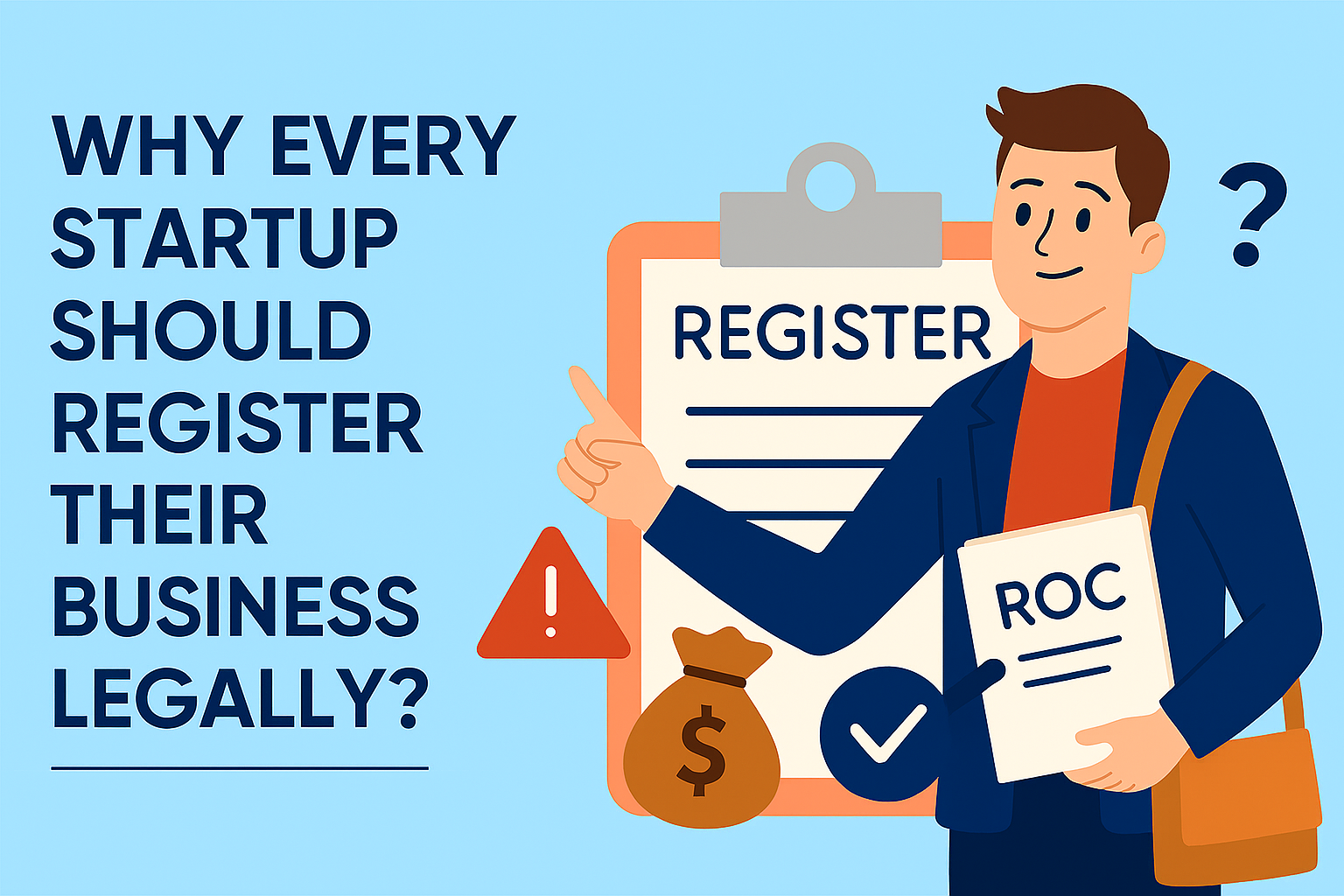
But while creativity and passion take you forward, there’s one important step that protects your startup from trouble:
Registering your business legally.
Many founders delay it.
Some think it’s complicated.
Some feel they’ll do it “once things grow.”
But registering your business early is one of the smartest decisions you can make.
The World of Startupland – Understanding Registration the Easy Way
Imagine a place called Startupland.
In Startupland, new ideas pop up every day—tech apps, food brands, boutiques, consulting services, gadgets, and more.
The King of Startupland has a simple rule:
“If you want to protect your idea, build trust, raise funds, and grow safely…
you must register your business.”
Why?
Because in Startupland (just like in real life), an unregistered business is like a house without a door—anyone can walk in, copy it, or cause problems.
Let’s understand this better.
The Story of Companyland – Understanding ROC Filing Easily
In Companyland, every business must send their yearly records to the Registrar of Companies (ROC)—the official guardian who keeps track of all companies.
The King of Companyland has a rule:
“Companies must submit their annual records on time so the kingdom remains transparent and trustworthy.”
If a company submits late, the King doesn’t get angry…
But he does apply strict penalties to encourage timely reporting.
Now, let’s see what happens when a company misses ROC filing in the real world.
1. Registration Protects Your Brand
When your business is unregistered:
- Anyone can copy your name
- Anyone can use your logo
- You cannot claim ownership legally
- Investors won’t take you seriously
Simple example:
Imagine you create a brand called FreshNest Juices.
You work hard, design a logo, and start gaining customers.
But since you’re not registered, someone else can:
- steal your name
- register it before you
- stop YOU from using your own brand
Legal registration protects you from this nightmare.
2. It Builds Trust with Customers & Businesses
People trust registered companies more because they are accountable and legally recognized.
A registered business looks:
✔ professional
✔ reliable
✔ serious about growth
✔ safe to work with
If you plan to work with:
- corporate clients
- online marketplaces
- big vendors
- distributors
- agencies
- suppliers
They will ALWAYS ask for registration documents.
3. It Makes You Eligible for Payments, Loans & Investments
No bank, investor, or angel fund invests in an unregistered startup.
To receive:
- funding
- loans
- payments from large clients
- business credit
- grants
- tenders
…your business must be legally registered.
Simple explanation:
“Investors trust businesses that exist on paper—not just in conversations.”
4. You Can Open a Business Bank Account
A business account is essential for:
- receiving payments
- paying vendors
- maintaining clean accounts
- showing organized financials
- avoiding tax issues
Unregistered businesses usually mix personal and business money, which creates problems later.
Registration makes everything cleaner and more transparent.
5. You Get Legal Protection Against Disputes
If someone:
- copies your work
- uses your brand name
- doesn’t pay you
- violates a contract
- misuses your services
You cannot take action unless your business is legally registered.
Registration gives you the power to protect your startup in any conflict.
6. You Can Hire Employees Legally
Once your startup grows, you will need:
- interns
- employees
- freelancers
- consultants
Registered businesses can:
- give offer letters
- sign contracts
- manage payroll
- issue experience certificates
This makes hiring smooth and professional.
7. It Helps You Avoid Penalties & Legal Problems
Unregistered businesses may face:
- tax issues
- compliance problems
- penalties
- legal notices
- blocked payments
Registering your business ensures you follow the rules from Day 1—keeping your startup safe.
8. You Become Eligible for Government Benefits
Registered startups can access:
- Startup India benefits
- tax exemptions
- MSME/Udyam advantages
- subsidies
- scheme-based funding
These benefits are NOT available to unregistered businesses.
9. It Makes Growth Easier and Faster
Once you’re registered, you can:
- apply for GST
- raise investments
- enter into contracts
- onboard partners
- scale operations
- expand to new cities or countries
Registration removes roadblocks and opens doors to opportunities.
How To Register Your Startup the Smart and Simple Way
You do not need a law degree to get this done. You just need a clear plan and a bit of focus.
Pick the right structure for your goals and risk level
Start with honest questions: How risky is this business? How big do I want it to be? Will I look for investors or stay bootstrapped?
Very small, low-risk side projects sometimes stay as sole proprietors for a while. Most founders who plan to grow, hire, or raise money often lean toward an LLC or corporation so they gain protection and a cleaner setup.
A short talk with a local small-business lawyer or tax pro can save you a lot of stress. Tell them your goals and timeline so they can point you toward the best fit.
Get help from pros and online tools so you do not feel lost
You do not have to do every step alone. Many founders mix:
- A small-business lawyer or legal clinic for structure and key questions
- An accountant for tax setup and basic bookkeeping advice
- Trusted online filing services or official government sites for the forms
You do not need to understand every legal term before you start. You just need to take the first clear step, then follow through. Set a simple goal for this week: choose a structure, check your local rules, and begin the filing. Your future company will thank you.
Final Thoughts
Starting a business is a big step, but registering it legally is what gives your startup a strong foundation.
It protects your brand, builds trust, opens financial doors, and keeps you safe from legal issues.
Think of registration as a shield—it keeps your startup protected while you focus on building your dream.
The earlier you register, the stronger your startup becomes.
How Vittara Advisory Helps You Build a Legally Strong Startup?
Setting up a business can feel confusing—forms, documents, registrations, compliance, taxes, and deadlines.
That’s where Vittara Advisory makes your life easier.
Vittara Advisory Can Help You With:
- Private Limited Company Registration
- LLP / OPC / Partnership Setup
- GST Registration
- Trademark Registration
- Accounting & ROC Compliance
- Annual Filings & Legal Documentation
- Business Advisory & Startup Consultation
Vittara Advisory ensures everything is done correctly, legally, and on time—
so you can focus on building your startup, not handling paperwork.
They guide you from day one, help you stay compliant, and reduce your stress throughout the journey.
A strong startup needs a strong legal partner—
and Vittara Advisory is the team that makes the entire process simple, smooth, and hassle-free.