Running a Private Limited Company is exciting—new ideas, new clients, and new opportunities.
But with all the growth, every company must follow some important rules.
One of the most important among them is:
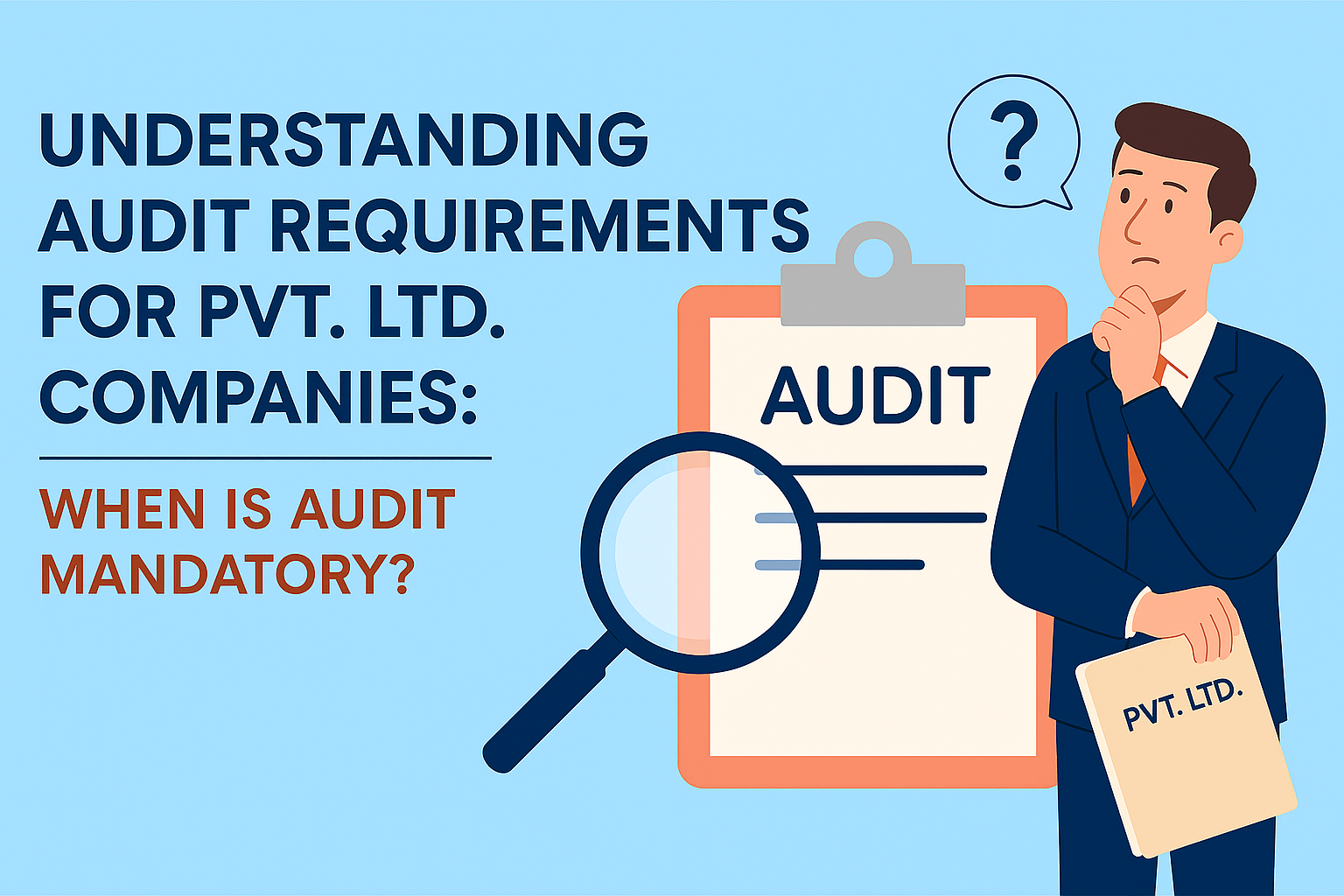
AUDIT.
The word may sound technical, but once you understand it simply, it becomes easy and manageable.
This guide explains audit requirements in a friendly, story-like way that makes everything easier for business owners and startup founders.
Why Do Private Limited Companies Need an Audit?
Every company earns money, spends money, and records financial activities.
To ensure everything is correct, transparent, and fair, an audit is conducted.
Think of an audit as a yearly check-up for your company.
Just like our regular health check-ups ensure we are doing well, an audit ensures your company is following all financial rules.
The Story of Companyland – Understanding Audit in a Simple Way
Imagine a place called Companyland.
In Companyland, businesses work hard, make profits, hire people, and grow.
To make sure all businesses are honest and financially healthy, the King of Companyland has a rule:
“Every company must show its financial records to a wise Accountant Knight (Auditor) once a year.”
This Knight checks:
- if money was recorded correctly
- if the company followed rules
- if nothing important is missing
- if the company is compliant and trustworthy
This story explains the purpose of audits in the simplest form.
When Is Audit Mandatory for a Private Limited Company?
In India, Pvt. Ltd. Companies must follow different types of audits based on their financial activity and size.
Let’s break it down clearly.
1. Statutory Audit – Mandatory for Every Pvt. Ltd. Company
Yes—every Pvt. Ltd. Company must undergo a statutory audit, even if:
- you made zero revenue
- the company had no transactions
- you are newly incorporated
- the company is inactive
Why is it compulsory?
Because every company must present its financial statements to maintain transparency and compliance.
Simple explanation:
“Your company must show a clear report of its finances at least once every year.”
2. Tax Audit – Mandatory Only in Specific Cases
A tax audit becomes compulsory only when your company crosses certain financial limits.
Your Company Needs a Tax Audit If:
- Turnover exceeds ₹10 crore (if your transactions are mostly digital)
- Turnover exceeds ₹1 crore (if you have significant cash transactions)
- You opted for presumptive taxation and income is below declared limits
This helps the government check whether your income and expenses are reported accurately.
3. GST Audit – Based on Turnover
A GST audit is required when your company crosses the turnover threshold set by GST rules (usually ₹2 crore or ₹5 crore depending on changes in notification).
This ensures your GST filings match your actual financial records.
Why Audits Are Important for Private Limited Companies
Audits help your business:
- stay compliant
- avoid penalties
- maintain investor trust
- keep financial records clean
- identify mistakes early
- improve long-term financial planning
Audits are not meant to trouble companies—they help them stay secure and well-managed.
What Does an Auditor Check?
An auditor reviews:
- income and expenses
- invoices and receipts
- bank statements
- financial statements
- tax records
- assets & liabilities
- internal controls
This process ensures that your financial data is accurate and reliable.
Checklist: Does Your Pvt. Ltd. Company Need an Audit This Year?
You definitely need an audit if:
✔ Your company is registered as a Pvt. Ltd.
✔ Your turnover crosses limits for tax/GST audit
✔ You have received investments
✔ You need audited financials for loans or tenders
✔ Your ROC filing deadline is approaching
✔ You have multiple financial transactions
If any of these apply—an audit is mandatory.
Final Thoughts
Audits may seem technical, but once you understand why they exist, they feel much simpler.
They bring clarity, trust, and financial discipline to your business.
A well-managed audit helps your company grow confidently, avoid penalties, and maintain a strong reputation.
Think of it as a protective shield that keeps your company safe and compliant.