Launching a startup in 2026 is easier than ever—but managing taxes? That’s where most founders struggle.
Many startups focus on growth, funding, and marketing but ignore startup tax planning in India, which leads to unnecessary penalties, cash flow issues, and missed savings.
The truth is:
* Smart tax planning can save your startup lakhs every year
* Poor tax planning can slow down your growth
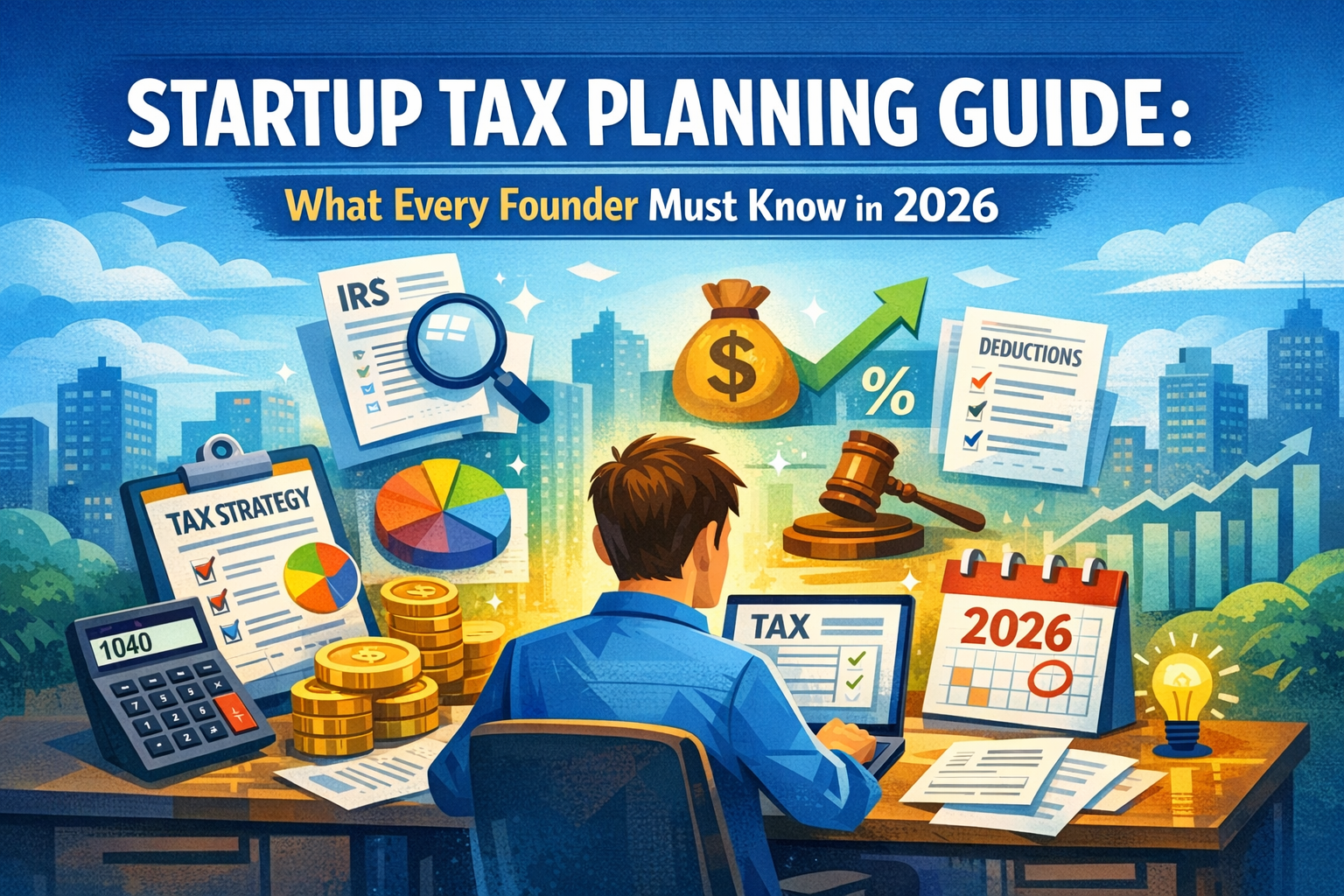
In this guide, you’ll learn everything about tax planning for startups, including GST, TDS, deductions, compliance, and expert strategies to maximize profits.
Why Startup Tax Planning is Important in 2026
With evolving tax regulations and digital compliance systems, startup tax compliance in India has become more structured—and stricter.
Key Benefits of Tax Planning:
✔ Reduces overall tax liability
✔ Helps avoid penalties and legal issues
✔ Improves cash flow management
✔ Builds investor confidence
✔ Ensures smooth business operations
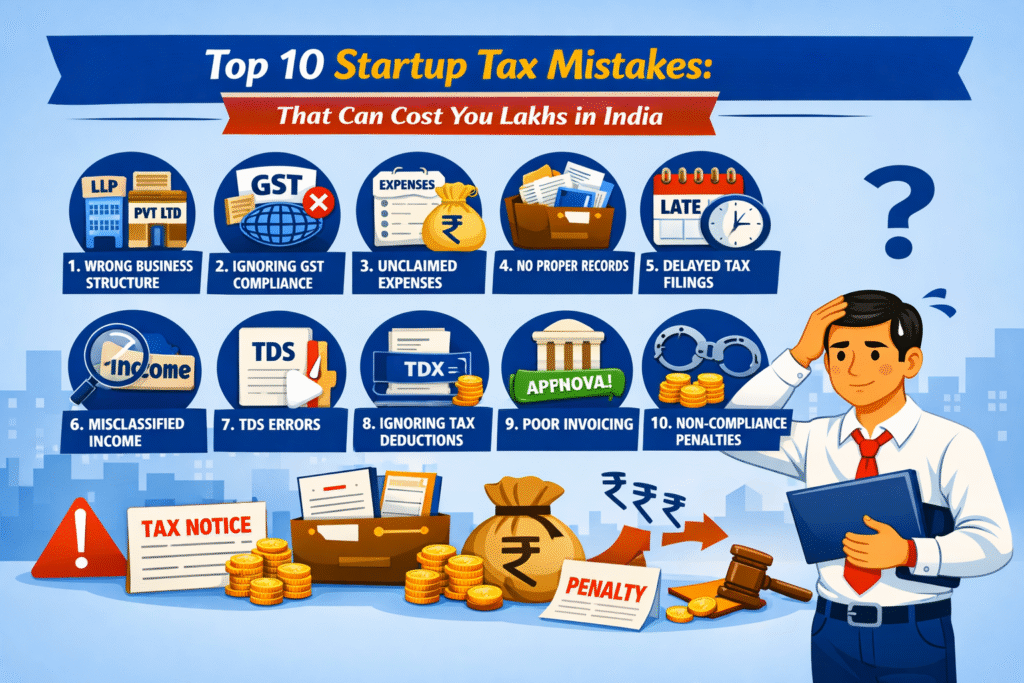
1. Choose the Right Business Structure
Your tax journey begins with selecting the right structure.
Options in India:
- Sole Proprietorship
- Partnership Firm
- LLP (Limited Liability Partnership)
- Private Limited Company
Each structure has different:
- Tax rates
- Compliance requirements
- Benefits and deductions
👉 Pro Tip: A Private Limited Company or LLP often provides better scalability and tax advantages for startups.
2. Understand GST for Startups in India
GST is one of the most critical aspects of startup tax planning.
When is GST required?
- If turnover exceeds the threshold
- Interstate sales
- Selling on e-commerce platforms
Key GST Components:
- GST Registration
- GST Filing (GSTR-1, GSTR-3B)
- Input Tax Credit (ITC)
👉 Proper GST compliance for startups ensures you don’t lose money due to errors or missed filings.
3. TDS Compliance for Startups
TDS (Tax Deducted at Source) is often overlooked by new founders.
Where TDS applies:
- Salaries
- Freelancer payments
- Vendor payments
Mistakes to avoid:
- Not deducting TDS
- Late deposit
- Incorrect returns
👉 Proper TDS compliance for startups helps avoid heavy penalties and interest.
4. Never Miss Tax Deadlines
Missing deadlines is one of the biggest financial mistakes.
Important filings:
- Income Tax Returns (ITR)
- GST returns
- TDS returns
Consequences:
- Late fees
- Interest penalties
- Legal notices
👉 Maintain a compliance calendar or outsource your filings.
5. Maintain Proper Accounting & Bookkeeping
Accurate records are the backbone of tax planning for startups.
Why it’s important:
- Correct tax calculation
- Easy filing
- Claiming deductions
Tools to use:
- Accounting software
- Professional bookkeeping services
6. Claim All Eligible Tax Deductions
Many startups overpay taxes due to lack of awareness.
Common deductions:
- Business expenses
- Office rent
- Salaries
- Marketing costs
- Depreciation
👉 Smart founders use startup tax saving strategies to reduce liabilities legally.
7. Leverage Startup India Tax Benefits
Recognized startups can enjoy significant tax exemptions.
Benefits include:
- Tax holiday under certain conditions
- Capital gains exemptions
- Investment benefits
Explore government schemes to boost your financial growth.
8. Separate Personal & Business Finances
Mixing finances creates confusion and compliance risks.
Best practices:
- Open a business bank account
- Track expenses separately
- Maintain financial clarity
9. Stay Compliant with Legal Requirements
Tax is only one part of compliance.
Other compliance includes:
- ROC filings
- Annual returns
- Audit requirements
Ignoring compliance can lead to penalties and business restrictions.
10. Work with Tax Professionals
DIY tax handling can be risky.
Benefits of hiring experts:
- Accurate tax planning
- Compliance assurance
- Maximum tax savings
- Strategic financial advice
Investing in professional help saves more than it costs.
Pro Tax Planning Tips for Startups in 2026
✔ Start tax planning from Day 1
✔ Track every expense
✔ Use automation tools
✔ Stay updated with tax laws
✔ Plan quarterly reviews
✔ Avoid last-minute filings
Final Thoughts
In 2026, startup success is not just about revenue—it’s about smart financial management.
With proper startup tax planning in India, you can:
- Save lakhs in taxes
- Avoid penalties
- Build a strong financial foundation
- Scale confidently
Remember: The earlier you plan, the more you save.
Frequently Asked Questions (FAQs)
1. What is startup tax planning in India?
Startup tax planning involves managing taxes efficiently by complying with GST, TDS, and income tax laws while using legal strategies to reduce tax liability.
2. When should a startup start tax planning?
Startups should begin tax planning from Day 1 to avoid compliance issues, reduce taxes, and maintain smooth financial operations.
3. Is GST mandatory for startups in India?
GST is mandatory if your business exceeds the turnover threshold, sells interstate, or operates on e-commerce platforms.
4. What is TDS and why is it important for startups?
TDS (Tax Deducted at Source) is a tax deducted while making certain payments. It ensures timely tax collection and helps avoid penalties when managed correctly.
6. What are the penalties for tax non-compliance?
Penalties include late fees, interest charges, legal notices, and in severe cases, business restrictions or suspension.
7. Do startups need professional tax consultants?
Yes, tax consultants help ensure compliance, reduce errors, and maximize tax savings, making them a valuable investment.
8. Which business structure is best for tax planning?
Private Limited Companies and LLPs are generally better for tax benefits and scalability, but the choice depends on your business needs.
9. What records should startups maintain for taxes?
Startups should maintain invoices, expense records, bank statements, payroll details, and tax filings for accurate compliance.
10. How often should startups review their tax planning?
Startups should review tax planning quarterly to stay updated and optimize financial strategies.
Need Expert Help?
Avoid costly mistakes and focus on growth.
Get professional support for:
- GST Registration & Filing
- TDS Compliance
- Startup Tax Planning
- End-to-End Accounting Services
Start smart. Stay compliant. Grow stress-free.